StackShare
About
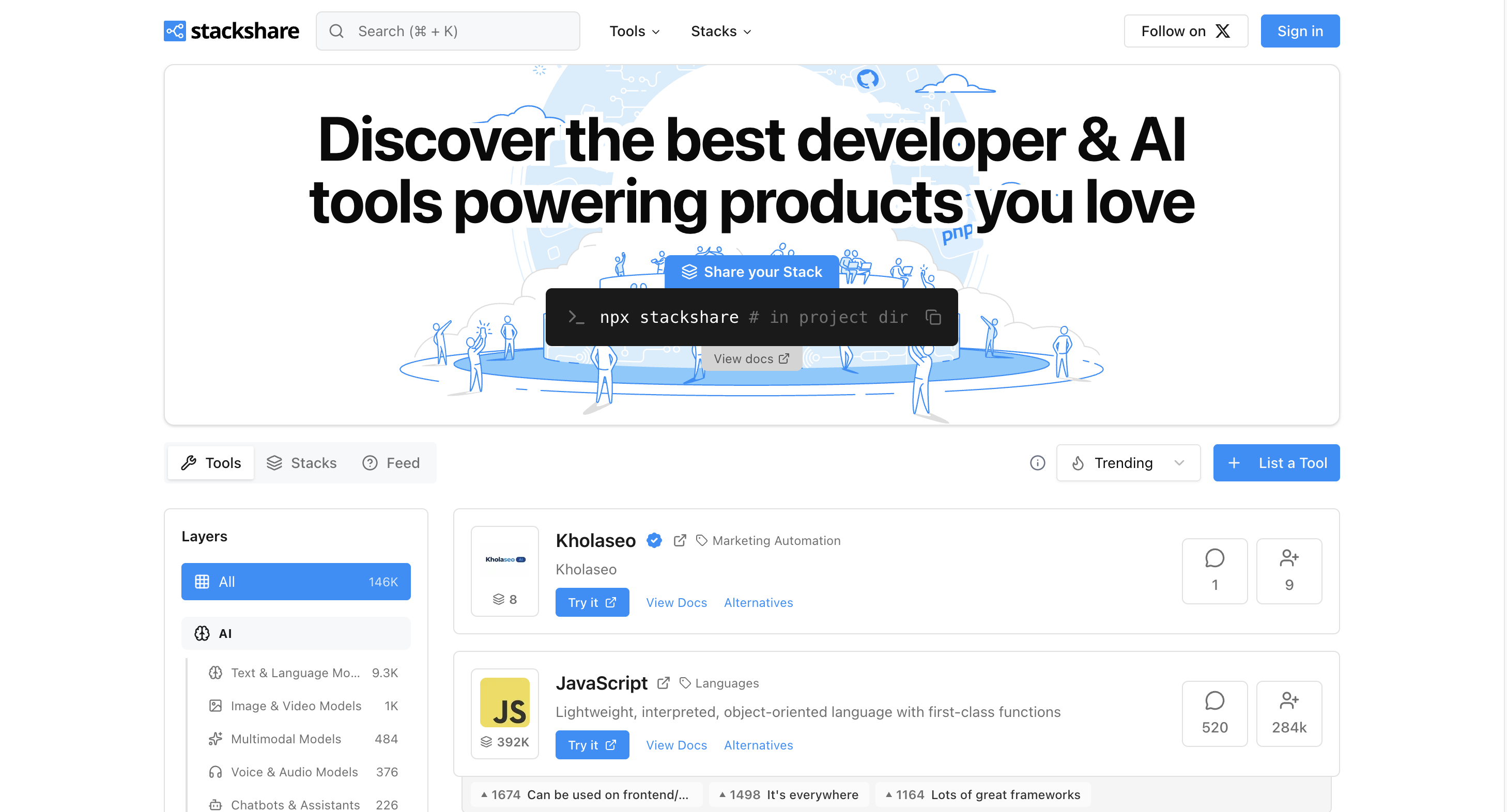
StackShare is a community-driven platform that provides tech stack intelligence for developers, engineers, and technology decision-makers. It allows users to discover, compare, and share the software tools and cloud infrastructure powering real-world applications — from startups to enterprises like Spotify, Airbnb, and Dropbox.
Founded in 2013 by Yonas Beshawred and based in San Francisco, StackShare has grown into a trusted resource where over 1 million developers share their public stacks, favorite tools, and technical insights. In August 2024, the company was acquired by FOSSA, continuing to operate as an active and growing platform for the developer community.
What StackShare Does
StackShare functions as both a technology discovery engine and a professional community for builders:
For Developers & Engineers
- Browse Real-World Tech Stacks: See exactly which tools and services companies like Airbnb, Spotify, and Lyft use to power their products
- Compare Tools: Side-by-side comparisons of popular technologies (e.g., Docker vs. Slack) help teams make informed decision.
- Discover Alternatives: "X vs. Y" and "X alternatives" pages allow users to explore similar tools across categories.
- Follow Trends: Popular, trending, and category-based lists keep you up to date with what's gaining traction in the developer ecosystem.
For Companies & Tool Providers
- List Your Tool: Create a verified profile for your developer tool, AI product, or infrastructure service.
- Gain Social Proof: When real companies add your tool to their public tech stacks, it serves as powerful, authentic validation.
- Reach Technical Decision-Makers: Your listing is visible to CTOs, VPEs, and lead engineers actively researching and selecting technologies.
- Influence Purchase Decisions: StackShare is frequently used during the evaluation phase of software procurement, especially for B2B and infrastructure tools.
Key Facts
| Metric |
Value |
| Founded |
2013 (as Leanstack) / 2014 (as StackShare) |
| Community Size |
1 million+ developers |
| Tools Listed |
Thousands across categories (developer tools, AI, cloud, databases, etc.) |
| Business Model |
Freemium (free listings + enterprise intelligence platform) |
| Notable Investors |
e.ventures, Cervin Ventures, angels from Dropbox, NYT, PhoneGap |
Why StackShare Matters
For AI tool creators, developer tool builders, and SaaS founders, StackShare offers unique advantages beyond a typical directory:
- High-Intent Technical Audience: Visitors come to StackShare specifically to research and compare technologies — not casually browse. This makes it an ideal channel for reaching developers, architects, and technical buyers.
- Authentic Social Proof: When a recognized company adds your tool to its tech stack, it signals trust and viability to potential customers. This kind of community-driven endorsement is difficult to fabricate
- Multiple Discovery Pathways: Your tool can be discovered through company tech stack pages, comparison pages, alternative pages, category lists, and trending sections — increasing visibility from multiple angles.
- SEO Value from High DA: A backlink from StackShare (DA 58–79) contributes positively to your site's authority and search rankings.
- Free and Verified Listings: Claiming and verifying your tool is completely free. Verified listings receive better placement and increased trust from the community.
Who Uses StackShare
- Developers & Engineers researching tools for new projects or evaluating alternatives for existing stacks
- CTOs & VPEs making technology decisions for their engineering organizations
- Startup Founders documenting their tech stacks to attract talent, customers, and investors
- Tool Providers & Vendors (especially developer tools, AI infrastructure, databases, cloud services, and DevOps platforms)
- Open Source Projects seeking adoption and community contributions
How to Get Listed
Listing your tool on StackShare is free and straightforward. Follow these steps:
-
Check if Your Tool Already Exists: Search for your tool name on StackShare. If a page already exists, click "Claim This Tool" to take ownership.
-
Verify Ownership (Free): StackShare requires verification to prevent spam. You can verify using:
- An email address from your tool's official domain, or
- Your GitHub repository (for open-source tools)
-
Create a New Listing (If Not Found): From the tools section or homepage, use the "List a Tool" flow. Provide basic information: name, website, category/tier, and (if applicable) GitHub/documentation links. New listings may go through a brief review/approval step.
-
Optimize Your Listing:
- Add a clear logo and compelling hero image/screenshot
- Write a concise, developer-focused description (prioritize clarity over marketing hype)
- Select the most specific category — this is critical for discovery
-
Drive Real Tech Stack Additions: Encourage actual users to add your tool to their company's public tech stack. Trending algorithms favor recent, real-world additions. This is the most effective way to improve your tool's visibility organically.
Pro Tips for Success
- Write for developers, not marketers. A one-sentence clarity statement outperforms marketing jargon.
- Get verified as soon as possible. Verification is free and may improve placement when ranking scores are similar.
- Encourage authentic "Why we chose it" content. Genuine tech stack decisions and reviews carry more weight than promotional material.
- Own your "alternatives" positioning. Ensure your category is correct so you appear in relevant comparison and alternative pages.
- Keep your listing current. Update descriptions and links when you ship major features or rebrand.
Link Attribute Note
Based on community analysis, links from StackShare tool listings are typically dofollow or follow standard link behavior. However, as with most community-driven platforms, you should prioritize the platform's value for referral traffic, social proof, and technical audience reach rather than relying solely on SEO transfer.